

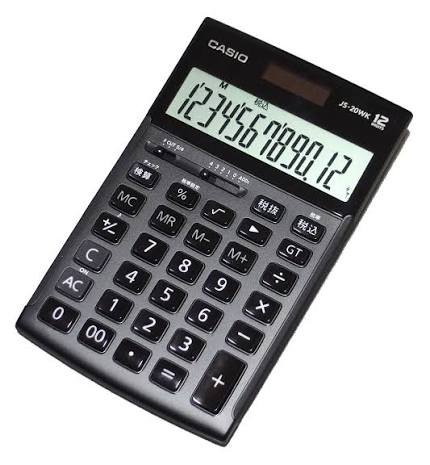
The Calculator, Explained: What It Actually Is and How to Pick the Right One
Quick question. When’s the last time you actually used a physical calculator? Like, held one in your hand, pressed real buttons? For most of us, honestly, it’s been ages. The word “calculator” still means something, but the object behind it has quietly changed shape over the years.
Let’s actually unpack that.
What Is a Calculator, Really?
At its core, a calculator is a device or tool that performs mathematical operations, addition, subtraction, multiplication, division, and often quite a bit more, without you having to do the maths in your head or on paper.
Simple concept. Genuinely useful invention. But “calculator” covers a lot more ground than people usually think. It’s not just the little plastic device with a solar panel sitting in a drawer somewhere. It’s also the app on your phone. It’s the tool built into your browser. It’s the specialised widget on a mortgage website working out your monthly repayment.
I think that broadness is actually the interesting part. One word, dozens of very different tools, all doing roughly the same underlying job.
A Quick Bit of History
Here’s a fun fact that surprises people, honestly. The calculator’s roots go back way further than most assume. Blaise Pascal, a French mathematician, built one of the earliest mechanical calculating machines back in the 1600s, apparently to help his father with tax calculations. Eighteen years old at the time, too, which is a wild thing to picture.
From there, calculators slowly evolved, mechanical gears, then electronic circuits, then the pocket calculators that became genuinely affordable and widespread through the 1970s. And now? Now most of us carry a calculator infinitely more powerful than those early machines, sitting quietly inside a phone we barely think of as a “calculator” at all.
The Main Types of Calculators
This is where it gets genuinely useful to know the difference, because picking the wrong type for the job is a surprisingly common, and surprisingly frustrating, mistake.
Basic calculators. Addition, subtraction, multiplication, division. Nothing fancy. Perfect for everyday arithmetic, splitting a bill, quick shopping totals, that sort of thing.
Scientific calculators. These add trigonometry, logarithms, exponents, and other functions students and professionals need for more advanced maths. If you’re in a science or engineering class, this is almost certainly the one you actually need, not the basic one.
Graphing calculators. These plot equations visually, turning an abstract formula into an actual curve or line you can see. Genuinely useful for algebra and calculus, where seeing the shape of a function makes the concept click in a way numbers alone often don’t.
Financial calculators. Built specifically around money-related maths, loan repayments, compound interest, mortgage estimates, that kind of thing. These often bake in assumptions specific to finance, amortisation schedules, tax brackets, which a general-purpose calculator simply won’t handle correctly.
Specialised online calculators. This is the big, sprawling category that’s exploded in recent years, honestly. BMI calculators, tip calculators, unit converters, pregnancy due-date calculators, you name it, there’s probably a dedicated online tool for it.
Why Specialised Calculators Actually Matter
I think this is genuinely underrated. A general basic calculator can technically do the arithmetic behind, say, a loan repayment. But it doesn’t know the formula. It doesn’t account for compounding, amortisation, or how interest actually accrues over time.
A dedicated loan calculator does. It’s built around the specific formula for that specific job, and honestly, that difference matters a lot more than people realise until they’ve been burned by a rough, oversimplified guess.
Same logic applies to BMI, tax, or pregnancy calculators. The tool isn’t smarter, exactly, it’s just built for one job, correctly, rather than trying to be everything at once.
Free Online Calculators: What to Look For
If you’re reaching for an online calculator rather than a physical device, a few things are worth checking before you trust the output.
No login required, ideally. Genuinely useful calculators shouldn’t need an account just to do basic maths.
Clear methodology. Trustworthy sites tend to explain what formula they’re using, particularly for financial or health calculators, where the underlying assumptions genuinely change the result.
Privacy matters, particularly for financial ones. Be cautious about entering sensitive information, like a Social Security number or account details, into any free online tool, regardless of how legitimate it looks. Reputable calculators only need the numbers relevant to the actual calculation, nothing more.
Consistency across sources. If two different calculators give you noticeably different answers for the same inputs, it’s usually down to different assumptions, different tax-year brackets, different rounding conventions, rather than either tool being flat-out wrong. Worth checking the methodology page if the gap seems significant.
A Word for Students
If you’re a student, honestly, get familiar with whichever calculator type your specific course actually requires before exam season sneaks up on you. Using a basic calculator when your course needs scientific functions is a genuinely common, avoidable mistake, and it’s a rough one to discover mid-exam.
Graphing calculators, in particular, take a bit of practice to get comfortable with. I’d say start playing around with one well before you actually need it for a real assignment or test, not the night before.
Final Thoughts
The calculator’s come a long way from Pascal’s 17th-century gearwork, honestly, from a mechanical box built to help with tax sums, to browser-based tools that handle everything from your mortgage to your BMI in seconds.
The core idea hasn’t really changed, though. Take the maths off your plate, get a fast, accurate answer, and get on with your day. Pick the right type for the job, check the source if the numbers matter, and honestly, that’s most of what you actually need to know.
Useful links:










Leave a Reply