

Aluminium Explained: The Everyday Metal You Never Really Think About
Pick up a can of fizzy drink. Go on, actually picture it in your hand for a second. Light, isn’t it? Barely feels like you’re holding metal at all. That’s aluminium doing its quiet, unglamorous job, and honestly, it does that job in about a thousand other places you’ve probably never even noticed.
Let’s actually get into it.
What Is Aluminium, Exactly?
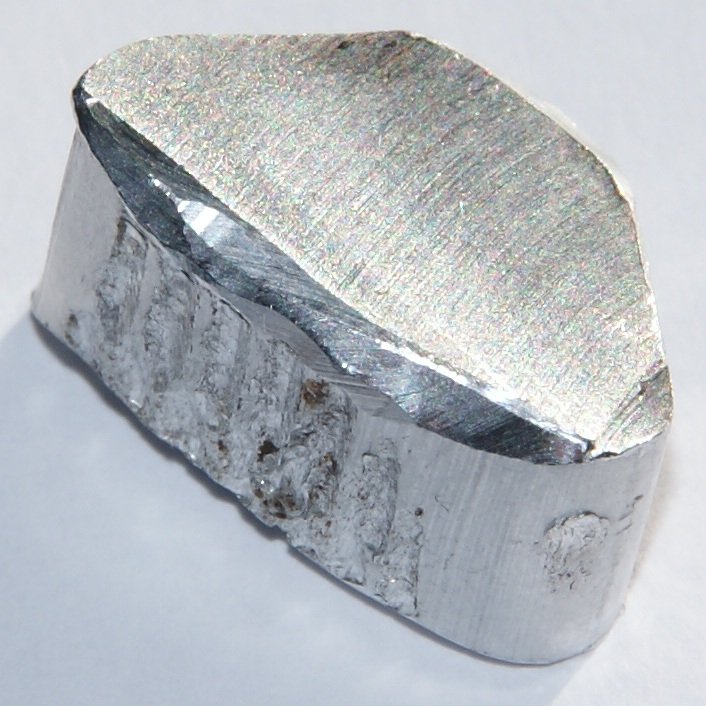
Aluminium is a chemical element, symbol Al, sitting at atomic number 13 on the periodic table. Silvery-white. Soft, relatively speaking, for a metal. And genuinely everywhere, it’s the third most abundant element in the Earth’s crust, right behind oxygen and silicon.
That abundance surprises people, I think. We tend to picture aluminium as some kind of specially manufactured, high-tech material, when actually the raw stuff is sitting in rock formations all over the planet, mostly locked up inside an ore called bauxite.
Here’s the twist, though: despite being so common, aluminium wasn’t actually isolated as a pure metal until 1825, by the Danish chemist Hans Christian Ørsted. Compare that to iron or copper, metals humans have worked with for thousands of years, and aluminium looks almost embarrassingly late to the party.
Why Did It Take So Long to Discover?
Good question, honestly, and the answer’s kind of satisfying once you know it. Aluminium doesn’t show up as a shiny nugget waiting to be dug out of the ground, the way gold sometimes does. It’s chemically bound up tightly with oxygen and other elements, and separating it out requires a fair bit of chemical know-how, more than early metalworkers had access to.
So for most of human history, aluminium was essentially invisible, hiding in plain sight inside ordinary-looking rock. Once the extraction chemistry caught up, though, things moved fast.
What Makes Aluminium So Useful?
A handful of properties, working together, basically explain why aluminium ended up absolutely everywhere in modern life.
It’s lightweight. Roughly a third the density of steel. That single fact alone explains a huge chunk of its popularity, particularly in transport, where every bit of saved weight matters.
It resists corrosion. Aluminium reacts with oxygen in the air almost instantly, forming a thin, tough layer of aluminium oxide on its surface. That layer acts like a protective shield, stopping further corrosion underneath. Ironic, honestly, a metal that’s technically quite reactive ends up being one of the most corrosion-resistant materials around, purely because of that self-forming protective coating.
It conducts electricity and heat well. Not quite as well as copper, but light enough and cheap enough that it’s used extensively in power lines and heat exchangers anyway.
It’s malleable and ductile. You can roll it paper-thin, thin enough to wrap a sandwich, or draw it into wire, without it snapping or cracking.
I think that combination, light, tough, workable, is genuinely rare. Most materials are good at one or two of those things. Aluminium somehow ticks most of the boxes at once.
Where Does Aluminium Actually Come From?
The starting point is bauxite ore, mined primarily in countries like Australia, Guinea, and Brazil. From there, it goes through a couple of major industrial steps.
First, the Bayer process extracts alumina (aluminium oxide) from the raw bauxite. Then, the Hall-Héroult process uses electrolysis, running an electric current through molten alumina, to actually separate out pure aluminium metal.
That second step is famously energy-intensive, honestly, aluminium production is sometimes nicknamed “solid electricity” in industry circles, because of just how much power the process demands. That’s a big part of why aluminium smelters tend to be located near cheap, abundant energy sources, hydroelectric dams, in particular.
Everyday Places You’ll Find It
Once you start noticing aluminium, you genuinely can’t stop, honestly. It’s in:
- Drink cans and food packaging — lightweight, doesn’t rust, keeps things fresh.
- Aircraft and vehicles — every kilogram saved translates directly into fuel efficiency.
- Window frames and building facades — corrosion resistance matters a lot outdoors.
- Power lines — lighter than copper, which matters over long stretches of cable.
- Foil, cookware, and household items — cheap, safe, and easy to shape.
I think what’s genuinely impressive is how invisible it manages to stay, despite being everywhere. Nobody walks around thinking “ah, aluminium” the way they might notice, say, a wooden table or a leather jacket. It just quietly does its job in the background.
The Recycling Story (Genuinely Impressive, Honestly)
This bit’s worth actually paying attention to, I think, because it’s one of the more genuinely good news stories in materials science. Aluminium can be recycled indefinitely, over and over, without losing its core properties. Not “sort of recycled.” Properly, fully, endlessly recyclable.
And recycling it uses dramatically less energy than producing new aluminium from raw bauxite ore, commonly cited figures put it at around 90-95% less energy. Given how energy-hungry the original extraction process is, that’s a massive saving, both environmentally and economically.
That’s a big part of why aluminium recycling programmes are so heavily promoted, honestly, it’s one of the rare cases where the “recycle this” message on packaging genuinely reflects a huge, measurable difference.
A Quick Myth to Clear Up
People sometimes confuse aluminium’s reactivity with fragility, assuming a “reactive” metal must be weak or unstable. Not really true here. Yes, it’s chemically reactive, but that protective oxide layer means the metal you actually handle day-to-day is remarkably stable and durable. Your kitchen foil isn’t secretly falling apart on a molecular level. It’s just quietly protected.
Final Thoughts
Aluminium’s one of those materials that’s genuinely shaped modern life, quietly, without much fanfare. Light enough for planes, tough enough for buildings, cheap enough for a drink can you’ll crush and forget about within minutes.
I think that’s honestly the most interesting thing about it. It’s not flashy. Nobody’s writing poetry about aluminium. But pull it out of modern life entirely, and honestly, a huge chunk of transport, packaging, and construction just stops working the way we’re used to. Quiet, unglamorous, and genuinely everywhere. That’s aluminium, really.
Useful links:












Leave a Reply