

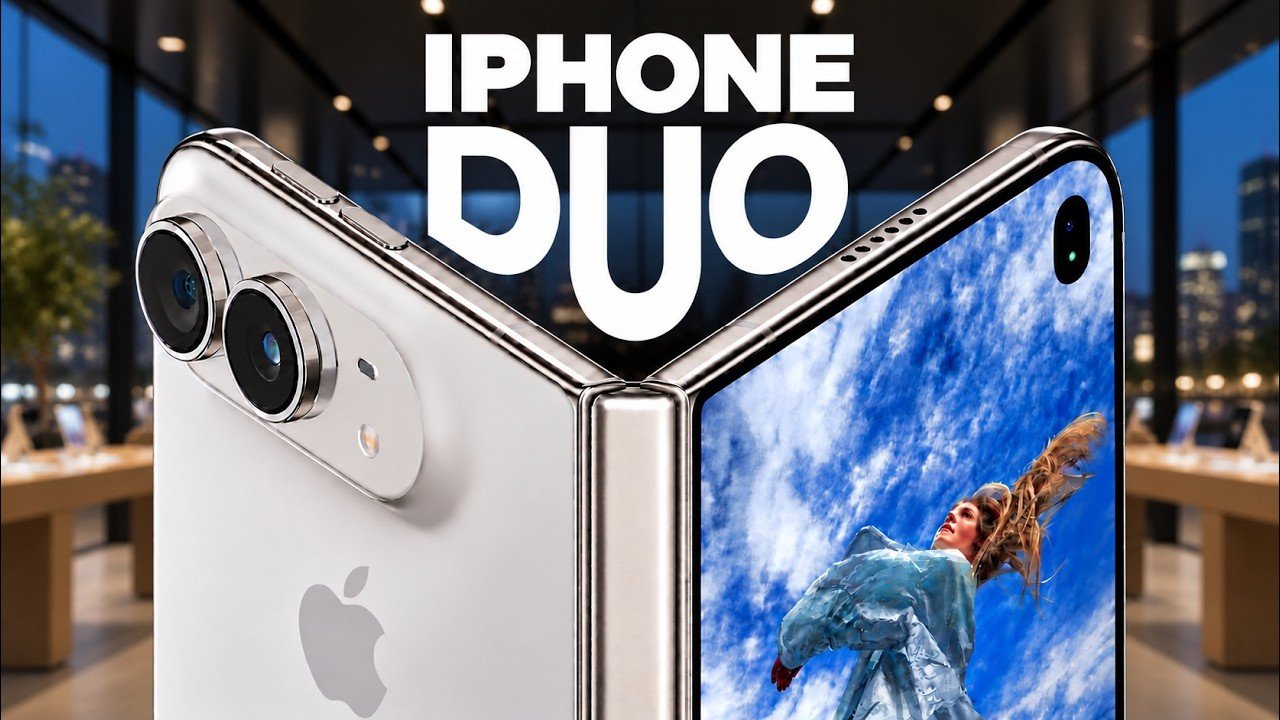

iPhone Duo Explained: Apple’s First Foldable, Fully Broken Down
Okay, I’ll be honest, I didn’t think this day would actually come. A folding iPhone? For years it felt like one of those rumors that just gets recycled every September and never actually lands. Well. It landed.
Apple announced the iPhone Duo on September 9, 2026, and it’s genuinely the biggest design shift the iPhone’s had since, well, since there was an iPhone at all.
Let’s actually walk through what it is.
What Is the iPhone Duo?
The iPhone Duo is Apple’s first foldable smartphone. Not a rumor anymore, not a patent filing, an actual, real, shipping device. It sits alongside the iPhone 18 Pro and Pro Max in this year’s lineup, but it’s a completely different animal, design-wise.
Closed, it behaves like a regular phone, compact, pocketable, one-handed. Open it up, and you get a much bigger screen, tablet territory, basically. Two devices, sort of, folded into one. That’s the whole pitch, and honestly, it’s a pretty compelling one on paper.
Release date’s set for October 23, 2026. So if you’re eyeing one, it’s not far off now.
The Display: What Makes It Different
Here’s where the “Duo” name actually starts making sense. There isn’t just one screen here, there’s two, functionally.
Closed, you’re looking at a 5.4-inch outer display. Apple’s comparing it in size to a passport, which, fair enough, that tracks. It’s compact enough to use one-handed, scrolling, texting, calls, all the normal stuff.
Unfold it, though, and you get a 7.6-inch inner display, the largest screen ever put on an iPhone. For reference, that’s edging close to iPad Mini territory, which sits around 8.3 inches. Less than an inch of difference, genuinely. That’s a big deal if you’ve ever wished your phone could just… be a small tablet sometimes.
iOS actually adapts depending on how the device is positioned too, fully open, partially folded, fully closed. That’s a proper software rethink, not just a hardware trick bolted onto the existing operating system.
Build Quality and Durability
Apple’s gone with a titanium frame here, which tracks with recent iPhone design choices generally. On the display protection side, it’s using Ceramic Shield 2 on the front and standard Ceramic Shield on the back.
It’s also rated IP68 for dust and water resistance, which genuinely matters for a folding phone. Hinges and folding mechanisms have historically been the weak point for foldables across the industry, so durability here is going to be one of the most scrutinised aspects once real-world reviews start rolling in.
What’s Powering It
Under the hood, the iPhone Duo runs on Apple’s new A20 Pro chip, built on a 2-nanometer process, paired with a vapor-chamber cooling system to help manage heat during heavier tasks like gaming or multitasking across the bigger unfolded display.
Connectivity-wise, it’s running Apple’s new C2 modem, which, notably, brings mmWave 5G support to Verizon through Apple’s own modem for the first time. Reports also point to roughly 50% faster uploads compared to previous modems. There’s also Apple’s N1 chip onboard, handling Wi-Fi 7, Bluetooth 6, and Thread support.
One thing worth flagging directly: it’s eSIM-only globally. No physical SIM tray at all, similar to the approach Apple already took with the iPhone Air. If you’re still relying on a physical SIM card for any reason, that’s worth checking into before you commit to buying one.
Battery Life
Apple’s citing up to 24 hours of battery life, using a dual-battery system to power both displays. Fast charging is also part of the package, up to 50% charge in roughly 20 minutes with a compatible fast charger.
Whether that 24-hour figure holds up in real-world, mixed use, especially with the bigger inner display running, is honestly the kind of claim that always needs independent testing to properly verify. Manufacturer battery estimates tend to be optimistic by nature.
Cameras
Camera-wise, the setup is actually a bit more modest than you might expect for Apple’s flagship folding device. It’s running dual 48MP rear cameras, a Fusion Ultra Wide and a Fusion Main, roughly comparable to the base iPhone 17’s setup rather than the more advanced 18 Pro or Pro Max cameras.
There’s a genuinely fun feature here worth mentioning though, called Smart Take. Stand in front of the Duo, and it’ll automatically detect when you’re posing and take the photo itself. Small feature, but honestly, a nice, practical use of the bigger, more visible display when it’s propped up.
Colors and Positioning
The iPhone Duo comes in two colorways: Night Sky and Star White. Fairly restrained naming, by Apple’s usual standards, nothing too flashy.
Where it sits in the market is interesting, too. Apple’s clearly stepping into territory Samsung’s occupied for a while now with the Galaxy Z Fold line, and other manufacturers like Huawei and Xiaomi have also been building out wider foldables. This is Apple entering a category it’s largely stayed out of until now, and given the company’s track record, I think it’s fair to expect real competitive pressure on the segment once it actually ships.
Should You Wait for Reviews?
Honestly? Probably, yeah. As of writing, there aren’t in-depth, hands-on reviews available yet, it’s still fresh off the announcement. Foldable durability, real battery performance, and how the hinge holds up over months of daily folding are all things that only actually show up properly once real units are in real hands for an extended stretch.
I think that’s just sensible advice for any first-generation foldable, honestly, not specific to Apple. First-gen hardware in any new category tends to have rough edges that only reveal themselves with time and real usage.
Final Thoughts
The iPhone Duo genuinely feels like the biggest shift to the iPhone’s core design since the original launched. Two displays, a rethought version of iOS to match, and a serious step into foldable territory Apple’s avoided for years.
Is it worth buying on day one? That’s going to come down to price, durability, and how the software experience actually holds up once real reviewers get their hands on it. But as an idea, and as a genuine design risk from a company that doesn’t usually take many? I think it’s worth paying attention to.
Useful links: