

I once sat in a meeting where three different departments pulled up three different numbers for the exact same metric. Same company. Same quarter. Three answers.
Nobody argued about it, weirdly. Everyone just… accepted it. Shrugged and moved on. That still bugs me, honestly. If you can’t agree on the number, how do you agree on whether things are going well?
That’s basically the whole reason performance information systems exist.
What a Performance Information System Actually Is
Strip away the jargon and it’s simple: a performance information system is just a structured way of collecting data, turning it into meaningful metrics, and putting those metrics in front of the right people so they can make decisions.
Not complicated in theory. Genuinely hard in practice.
Most organizations don’t lack data. If anything, they’re drowning in it — spreadsheets, dashboards, half-finished reports nobody reads past page two. The real problem is turning that pile of numbers into something someone can actually act on.
The Building Blocks
A few pieces show up in basically every serious performance system, whether it’s a Fortune 500 company or a five-person startup tracking things on a whiteboard.
Objectives. What are you actually trying to achieve? Sounds obvious. It isn’t. I’ve watched teams spend months tracking metrics tied to goals nobody could clearly articulate anymore. The goal drifted, the metric didn’t, and suddenly you’re optimizing for something that doesn’t matter.
Key Performance Indicators (KPIs). These are the specific, measurable signals that tell you whether you’re hitting the objective. Revenue growth, customer churn, defect rate, whatever fits the goal. Good KPIs are concrete. Vague ones — “improve customer happiness” — are basically useless unless you attach a real number to them.
Data collection. Someone, or something, has to actually gather the raw numbers. Sales systems, sensors, surveys, transaction logs. This is the unglamorous plumbing underneath everything else, and it’s where a lot of systems quietly fail — garbage data in, garbage insight out.
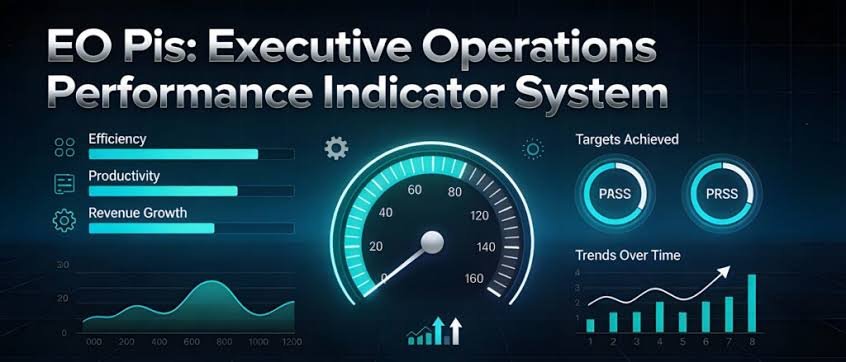
Reporting and dashboards. The layer humans actually look at. A good dashboard tells a story at a glance. A bad one is just a wall of numbers that makes everyone’s eyes glaze over three seconds in.
Feedback and adjustment. The part people forget. Once you see the numbers, you’re supposed to actually change something. A performance system that just displays data without triggering any decisions is basically decoration.
Real Frameworks You’ve Probably Heard Of
This isn’t some abstract idea. Real, well-documented frameworks exist, and companies use them every day.
OKRs (Objectives and Key Results) — popularized by Intel and later famously adopted by Google. You set a big-picture objective, then attach a handful of measurable key results underneath it. Simple structure, brutally effective when done honestly, kind of toothless when teams game the numbers to look good.
Balanced Scorecard — developed back in the early ’90s by Kaplan and Norton. Instead of obsessing over financial metrics alone, it forces you to also track customer experience, internal processes, and learning/growth. I like this one because it stops finance numbers from completely dominating the conversation, which happens more often than it should.
KPI dashboards — less a formal framework, more a general practice. Pick your handful of critical numbers, put them somewhere visible, update them regularly. Simple, but easy to mess up if you pick the wrong metrics or update them so rarely they go stale.
Why This Actually Matters (Beyond Just Looking Organized)
Here’s the uncomfortable truth: without a real performance system, decisions get made on vibes. Gut feeling. Whoever argues loudest in the meeting.
Sometimes that’s fine, honestly — small decisions, low stakes, sure, go with your gut. But for anything with real consequences? Vibes don’t scale. They don’t hold up when someone asks “why did we make that call” six months later and nobody remembers the reasoning.
A solid performance system creates a paper trail of logic. Not bureaucracy for its own sake — actual traceability. You can look back and see: here’s what we measured, here’s what it showed, here’s what we changed because of it.
Where Companies Get This Wrong
I’ve seen a few recurring mistakes, and honestly most of them come down to overcomplicating things.
Tracking too many metrics is probably the biggest one. If everything is a priority, nothing is. I’ve seen dashboards with forty different KPIs on them, and predictably, nobody looks at more than three.
Another classic mistake: metrics that don’t map to any real decision. If a number changing wouldn’t actually change what you do next, why are you tracking it? Vanity metrics feel good but often don’t earn their keep.
And data silos. Different departments tracking things their own way, with their own definitions, is exactly how you end up in that meeting I mentioned earlier — three answers, one metric, nobody sure which one’s real.
The Bottom Line
A performance information system isn’t about drowning in dashboards or chasing every number you can measure. It’s about picking the few things that genuinely matter, measuring them consistently, and actually using what you find to make different choices.
Simple to say. Takes real discipline to do well. But once an organization gets it right, that meeting-room moment — three departments, three different numbers, nobody blinking — stops happening. And honestly, that alone makes it worth the effort.














Leave a Reply