

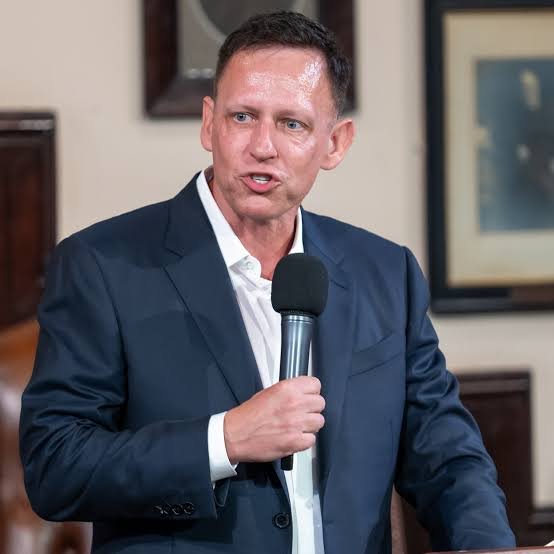
Few names spark as much debate in the tech world as Peter Thiel. Co-founder of PayPal, early backer of Facebook, and architect of the data-analytics giant Palantir, Thiel has spent three decades betting against consensus — and winning often enough to become one of the most influential figures in Silicon Valley. This article breaks down who Peter Thiel is, how he made his fortune, his major companies, and the ideas that define his approach to business and investing.
Who Is Peter Thiel?
Peter Thiel is a German-American entrepreneur, venture capitalist, and author best known for co-founding PayPal in 1998 and later Palantir Technologies in 2003. Beyond building companies, he’s become known as one of the first major outside investors in Facebook, a co-founder of the venture capital firm Founders Fund, and the author of the bestselling business book Zero to One.
Thiel studied philosophy and law at Stanford University before moving into finance and, eventually, technology. His combination of intellectual rigor and business instinct has made him a magnet for both admiration and criticism — he’s often described as one of the tech industry’s most polarizing figures.
Early Life and Education
Born in Frankfurt, Germany, Thiel moved to the United States as a child. He earned an undergraduate degree in philosophy from Stanford, followed by a law degree from Stanford Law School. Before founding PayPal, he briefly worked as a securities lawyer and later as a derivatives trader, experiences that shaped his analytical, risk-aware approach to business.
How Peter Thiel Built His Fortune
PayPal and the “PayPal Mafia”
In 1998, Thiel co-founded Confinity, which later merged with Elon Musk’s X.com to become PayPal. He served as CEO before the company’s sale to eBay in 2002 for $1.5 billion. That deal didn’t just make Thiel wealthy — it launched the careers of a group of PayPal alumni, later nicknamed the “PayPal Mafia,” who went on to found or fund companies like Tesla, LinkedIn, YouTube, and SpaceX.
The Facebook Bet
In 2004, Thiel made one of the most talked-about early-stage investments in tech history: a $500,000 angel investment in Facebook in exchange for roughly 10% of the company. As Facebook grew into a global platform, that stake became worth well over a billion dollars, cementing Thiel’s reputation as an investor with an uncanny ability to spot generational companies early.
Palantir Technologies
In 2003, Thiel co-founded Palantir Technologies, a data-analytics company that works with government agencies, defense organizations, and large enterprises. Palantir went public in 2020, and its stock has become a major driver of Thiel’s net worth, particularly as demand for AI-driven analytics has grown.
Founders Fund
Thiel also co-founded Founders Fund, a venture capital firm known for backing ambitious, capital-intensive companies in areas like aerospace, biotechnology, and defense technology, including early investments in SpaceX and Airbnb. The firm’s investment philosophy reflects Thiel’s broader belief that venture capital should fund transformative technology rather than incremental improvements.
Peter Thiel’s Net Worth
Estimates of Peter Thiel’s net worth vary significantly depending on the source and how private holdings, carried interest, and illiquid stakes are valued. Most recent trackers place his fortune in the tens of billions of dollars, with his publicly disclosed Palantir shares alone worth several billion dollars as of 2026. The wide range in public estimates reflects a common challenge with billionaire wealth tracking: much of Thiel’s wealth is tied to volatile public equity and privately held stakes that are harder to price precisely. Because these figures shift with market conditions, it’s worth checking a current financial source for the latest number rather than relying on any single fixed figure.
Thiel’s Investment Philosophy
Contrarian Thinking
A recurring theme throughout Thiel’s career is contrarianism — the idea that the biggest opportunities lie in ideas most people dismiss or haven’t considered. This philosophy is central to Zero to One, where he argues that true innovation comes from creating something new (going from zero to one) rather than copying existing models (going from one to n).
Monopoly Over Competition
Thiel is also known for his unconventional view that healthy businesses should aim to build monopolies through unique innovation, rather than compete directly in crowded markets. He argues that intense competition often erodes profits and discourages the kind of long-term thinking needed for breakthrough technology.
Long-Term, High-Conviction Bets
Across PayPal, Facebook, and Palantir, a pattern emerges: Thiel tends to make concentrated, long-term bets on companies and technologies he believes in deeply, rather than diversifying broadly. This approach carries more risk but has historically produced outsized returns.
Beyond Business: Public Influence
Thiel’s impact extends past the corporate world. He’s been an active political donor and commentator, a vocal critic of parts of traditional higher education, and a supporter of alternative education initiatives for young entrepreneurs. His views on technology, politics, and society regularly generate discussion — and disagreement — across the tech and media landscape.
Key Takeaways
Peter Thiel’s career illustrates how contrarian thinking, early conviction, and a willingness to back unproven ideas can reshape entire industries. From PayPal’s early days to Palantir’s growth and his outsized bet on Facebook, his story offers a case study in high-risk, high-reward investing.
Whether you view him as a visionary or a controversial figure, Peter Thiel’s influence on modern technology and venture capital is hard to overstate — and his investment principles continue to shape how founders and investors think about building lasting companies.












Leave a Reply