

What Does “Cesta Roman” Actually Mean? Breaking Down a Confusing Search Term
Typed “cesta roman” into Google and come away more confused than when you started? Honestly, fair enough. I did the exact same thing, and what I found was genuinely one of the messier searches I’ve run in a while.
Let’s actually sort through it properly.
Why This Search Is Genuinely Confusing
Here’s the thing that struck me first, honestly. I pulled up close to a dozen articles all claiming to explain “cesta roman,” and they don’t agree with each other. Not even slightly.
One says it means Roman roads, the actual paved highway network built by the Roman Empire. Another insists it’s a traditional Eastern European craft, woven willow baskets, apparently. A third describes it as some kind of ceremonial Roman vase used in ancient rituals. A fourth goes fully abstract, calling it a “philosophical path” representing Roman values like discipline and order.
Four completely different claims. Same search term. That’s not normal variation in how a topic gets covered, honestly. That’s a sign something’s off.
What’s Actually Going On Here
I think what’s happened is fairly straightforward, if a little unsettling. “Cesta roman” appears to be a search term with no single, established, agreed-upon meaning, and a wave of content, likely AI-generated, has rushed in to fill that gap with confident-sounding but contradictory explanations.
Each site picked its own plausible-sounding story and ran with it, roads, baskets, relics, philosophy, dressed up with historical language and a “we’ve got you covered” tone. None of them cite an actual academic source, historian, or dictionary consistently. They just assert things confidently, which, honestly, is exactly the pattern you’d expect from content built to rank on search engines rather than content built to genuinely inform anyone.
I think it’s worth flagging that clearly, rather than picking one of these stories and repeating it like it’s settled fact.
So Let’s Actually Break Down the Words
Here’s where I can give you something genuinely reliable, honestly, by looking at the actual words themselves rather than the invented “definitions” floating around.
Cesta is a real word in several languages, but it means different things depending on which one.
In Czech and Slovak, cesta means “road,” “way,” or “journey.” Straightforward, common word, used constantly in everyday conversation.
In Spanish and Portuguese, cesta means “basket.” Also a completely ordinary, everyday word, nothing mystical about it.
Roman, meanwhile, also splits across languages in an interesting way. In English, obviously, it relates to ancient Rome, or it’s used as a given name. But in French, Dutch, German, and Romanian, roman actually means “novel,” as in the literary genre, a full-length work of fiction. Genuinely unrelated to ancient Rome in that context.
So depending purely on which language you’re reading it through, “cesta roman” could theoretically mean something like “the road of a novel,” “a Roman journey,” “a Roman basket,” or just be two completely unrelated words that happen to sit next to each other without forming any fixed, recognised phrase at all.
Is There an Established, Real Definition?
Based on everything I could actually verify, honestly, no. There doesn’t appear to be one single, widely recognised meaning for “cesta roman” as a fixed phrase, the way there is for, say, “via romana” (Latin for “Roman road,” a genuinely established historical term).
That’s an important distinction, I think. Via Romana is real, documented, historically grounded terminology, used by historians and archaeologists studying the Roman road network. “Cesta roman,” as a specific combined phrase, doesn’t carry that same established weight. It looks more like a search term that content sites latched onto and then improvised definitions around, rather than a genuine historical or cultural concept with real depth behind it.
What I’d Actually Trust Instead
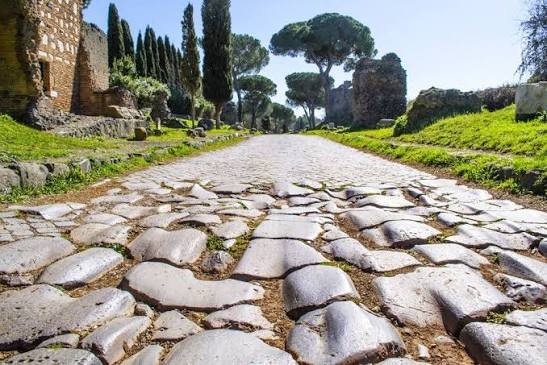
If you’re genuinely interested in Roman roads specifically, that part, at least, is well documented and fascinating in its own right. The Roman road network really did stretch across an enormous distance, connecting cities, forts, and provinces throughout the empire, and much of it was built with genuinely impressive engineering for the era, layered stone, gravel, and sand, designed to last.
If it’s the “novel” angle that caught your attention, roman as a literary term has its own rich, well-documented history too, particularly in French and German literary traditions, worth exploring on its own terms rather than tangled up with an invented Roman-history narrative.
Either thread is worth reading about properly. Just maybe not through the specific lens of “cesta roman” as if it’s an established, singular concept, because based on what’s actually out there, it doesn’t look like one.
A Broader Lesson Worth Taking From This
Honestly, I think this search is a genuinely good example of something worth being generally wary of. When a phrase returns multiple confident, detailed, yet completely contradictory explanations, especially spread across sites with similar formatting and no clear original source, that’s usually a sign you’re looking at manufactured content, not established knowledge.
Worth double-checking anything like that against an actual dictionary, encyclopedia, or subject-matter expert before treating it as fact. Takes a couple of extra minutes, honestly, and it makes a real difference.
Final Thoughts
“Cesta roman” doesn’t appear to have one clear, agreed meaning, despite what a wall of confident-sounding articles might suggest. The individual words carry real meanings across different languages, road, basket, novel, Roman, but combined together as this specific phrase, there’s no solid, consistent definition backing it up.
Sometimes the most honest answer to “what does this mean” is simply: it depends which language you’re reading it through, and nobody’s actually agreed on one fixed answer yet. That’s a genuinely fine place to land, honestly, better than pretending there’s a tidy definition when there really isn’t one.
Useful links:












Leave a Reply