

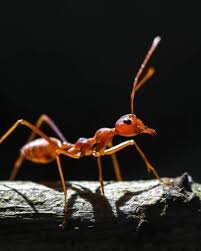
If you’ve searched for “hormita,” you’ve probably noticed the internet doesn’t agree on what it actually means. Some pages call it a rare ant species. Others describe it as a food, a travel destination, or even a wellness supplement. Here’s the more useful answer: hormita comes from the Spanish word hormiga, meaning “ant.” Adding “-ita” is a common Spanish diminutive, used to make a word smaller, softer, or more affectionate — much like adding “-y” or “-ie” in English (dog → doggy). So hormita, in its most grounded sense, simply means “little ant” — a warm, informal way of referring to one of nature’s smallest but most impressive creatures.
Since the word points back to real ants, let’s skip the invented trivia and look at what ants actually do — because the truth is more interesting than any fabricated “hormita species” story.
Where the Word Hormita Comes From
A Spanish Diminutive, Not a Species Name
In Spanish, diminutive suffixes like “-ita” and “-ito” are everywhere. They soften words and add emotional warmth: casa (house) becomes casita (little house, or “cozy little home”), and hormiga (ant) can become hormiguita or, in some regional or informal usage, hormita — “little ant.” It’s the kind of word you might use affectionately for a hardworking child, a tiny pet, or literally an ant you’re watching cross the sidewalk.
Why It’s Being Misused Online
A wave of recent AI-generated articles has repurposed “hormita” as if it were a proper noun — a fictional ant species, a food, even a supplement brand. None of these are documented in real biology, culinary history, or product research. If you’re researching this term for content, marketing, or curiosity, it’s worth knowing the word itself is just a diminutive, not an established name for anything specific.
Real Ant Facts Worth Knowing
Since “little ant” is really what brought you here, here are genuine, well-documented facts about ants — the actual insects behind the word.
How Many Ants Are There?
Ants are almost unimaginably abundant. Researchers estimate there are roughly 20 quadrillion ants on Earth, and more than 12,000 species have been formally described, with estimates suggesting the true number could be closer to 20,000, according to National Geographic.
How Ant Colonies Are Organized
Ants live in highly structured colonies built around cooperation. Each colony typically has a queen (or several), whose job is reproduction, along with workers who forage, build, and defend the nest. Some species, like carpenter ants, nest inside wood, while army ants have no permanent home at all and migrate constantly in search of food, as National Geographic explains.
How Ants Communicate
Ants don’t rely on sound the way many animals do. Instead, they primarily use pheromones — chemical signals — to mark trails, warn of danger, and coordinate work. Some species can even sense vibrations through the ground using their feet, according to National Geographic Kids.
The Ecological Role of Ants
Ants aren’t just background insects — they actively shape the ecosystems around them. Their tunneling aerates soil, their foraging helps recycle organic material, and several species prey on smaller pests, offering a natural form of pest control in gardens and farmland.
When Ants Become a Problem
Not every ant interaction is beneficial. Invasive species, in particular, can cause real damage. Between 1930 and 2021, invasive ants were linked to an estimated $51 billion in economic losses worldwide, and researchers have identified over 500 ant species living outside their native ranges, largely due to global trade and travel, per National Geographic’s reporting.
Dealing With Ants at Home
If your interest in “hormita” is more practical — as in, ants showing up in your kitchen — a few grounded strategies work better than folk remedies:
Identify Before You Treat
Not all ants respond to the same treatment. Species like pharaoh ants nest indoors in warm, damp areas and can spread bacteria to food, making proper identification important before choosing a treatment method, according to guidance from the Redbridge Council pest control service.
Remove What Attracts Them
Ants are drawn to food residue, moisture, and easy entry points. Sealing cracks, wiping up spills promptly, and storing food in airtight containers go a long way toward prevention.
Use Targeted Treatments When Needed
For persistent infestations, registered ant baits and barrier treatments — available through hardware and home stores — are generally more effective than DIY mixtures, especially for larger or recurring colonies.
Final Thoughts
“Hormita” isn’t a hidden species, exotic destination, or wellness trend — it’s simply Spanish for “little ant,” a small linguistic detail that got swept up in a wave of AI-generated filler content. The real story is better anyway: ants are among the most successful, organized, and ecologically important creatures on the planet, whether you’re admiring them in your garden or trying to keep them out of your kitchen.











Leave a Reply