

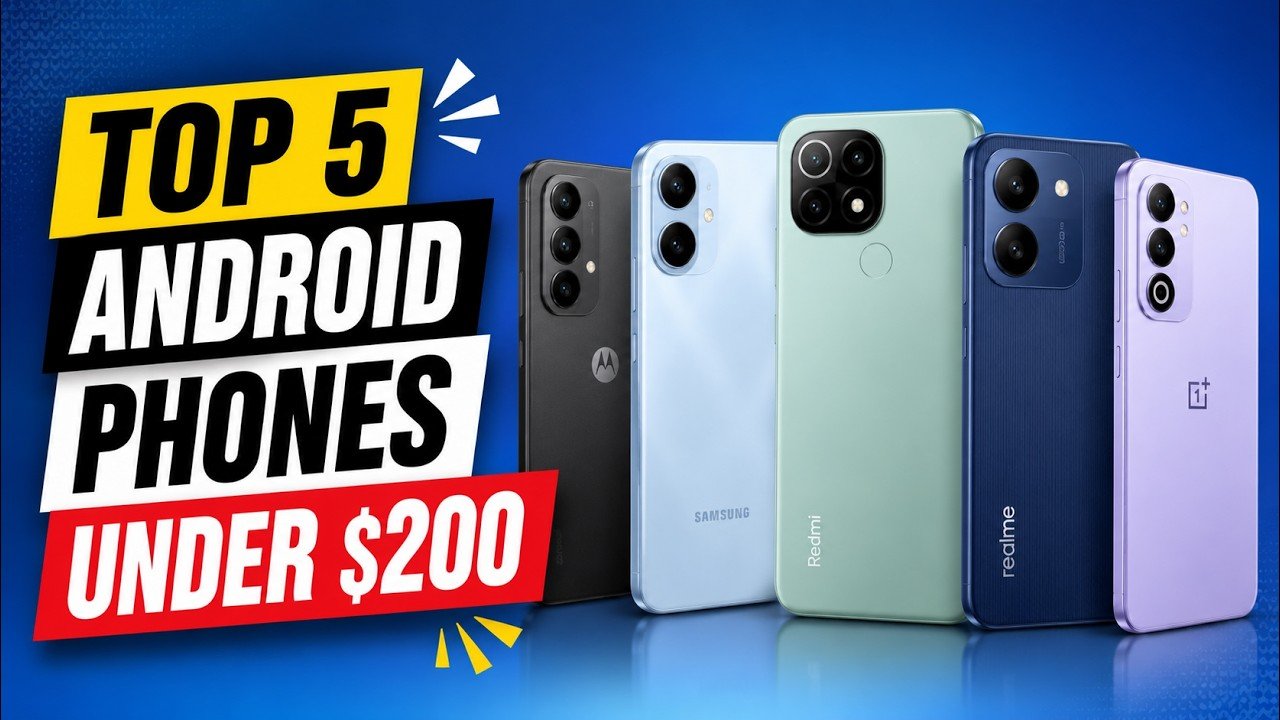
Best Smartphones Under $200: A Global Buyer’s Guide for 2026
Okay, real talk. Under $200 used to mean garbage. Sluggish chips, washed-out screens, cameras that turned your dinner into some kind of abstract art piece. That was the old normal, honestly, not that long ago either.
Things have shifted. Genuinely, dramatically. Let’s walk through what’s actually worth buying right now.
Why This Price Bracket Finally Makes Sense
I think 2026 is the year budget phones stopped feeling like budget phones, at least on the surface. AMOLED displays, 120Hz refresh rates, 5G connectivity, even multi-year software support, all of that’s showing up under $200 now, which honestly wasn’t the case even two or three years back.
That said, compromises still exist. You’re not getting flagship camera processing or top-tier gaming chips at this price. The trick, same as always, is picking the right compromises for how you actually use your phone day to day.
What Actually Matters at This Price Point
A few things genuinely make or break a budget phone, in my experience, more than any spec sheet number.
Software update promise. This one’s underrated, honestly. A phone that gets security patches for five or six years ages far better than one that stops receiving updates after eighteen months, even if the second one had slightly better specs on paper at launch.
Battery capacity, and real-world endurance. 5000mAh is basically the standard now at this price, and honestly, it should be. If a phone in this bracket can’t comfortably get you through a full day, that’s a genuine red flag.
Display quality over raw resolution. A good AMOLED panel at 90Hz beats a mediocre LCD at 120Hz nearly every time you’re actually using the phone, not just reading the spec sheet.
The Standout Picks Right Now
Based on current listings and reviews, a handful of phones consistently come up as the strongest picks in the sub-$200 bracket globally.
Motorola Moto G (2026). Priced right around $199. This one keeps winning “best overall” comparisons, and honestly, it’s easy to see why. Clean, close-to-stock Android, a genuinely large 5,200mAh battery, 5G support, and a MediaTek Dimensity chip that feels snappier in daily use than its price tag suggests. If you just want a reliable daily driver without fuss, this is probably it.
Samsung Galaxy A16 5G. Sitting around $170. Samsung’s real trump card here isn’t the hardware, honestly, it’s the software promise. Around six years of OS and security updates is genuinely remarkable at this price, meaning the phone stays current and secure well into the next decade. The Super AMOLED display looks noticeably better than most competitors in this range too.
Xiaomi Redmi Note 14 / Note 15. Just under $200. Xiaomi consistently pushes hardware further than the price suggests it should, a 108MP main camera on some variants, fast 33W to 45W charging, and a genuinely large 6,000mAh battery on the 4G model. The trade-off, and it’s worth knowing upfront, is that Xiaomi’s HyperOS software carries more bundled apps and ads than Samsung or Motorola’s cleaner interfaces.
Poco M6 Pro / Poco C65. A strong pick specifically if gaming matters to you. The Helio G99 chip, paired with decent RAM, handles popular mobile games reasonably well on medium settings, genuinely punching above its price bracket for casual and semi-competitive gaming.
Infinix Zero 30 4G. Worth a look if display quality is your priority. A 6.78-inch curved AMOLED panel with 120Hz refresh and genuinely high peak brightness makes this one of the most “flagship-feeling” phones on this entire list, even though it undercuts most competitors on price.
I’d genuinely recommend narrowing it down to two or three of these and comparing them directly, rather than grabbing whichever one has the flashiest online ad. Marketing budgets don’t always correlate with actual value, honestly.
A Renewed Flagship Is Sometimes the Smarter Buy
Here’s a bit of contrarian advice, honestly, worth at least considering before you commit to a brand-new budget model. Certified renewed or refurbished flagships sometimes deliver more genuine value than a brand-new sub-$200 phone, particularly for camera quality and raw processing power.
A two or three-year-old flagship, properly refurbished with a battery health check, can outperform a brand-new budget release in almost every meaningful way except perhaps software longevity. Worth keeping an open mind here, rather than assuming “newest and cheapest” automatically beats “older and better built.”
Buying Tips Worth Following, Wherever You Are
A few practical habits, honestly the same ones I’d suggest regardless of which country you’re buying in.
- Check regional network band compatibility before buying internationally or importing. A phone built for one region’s networks doesn’t always work perfectly on another’s, particularly around 5G bands.
- Compare software update policies directly, not just headline specs. A phone with a longer guaranteed update window genuinely lasts longer in practical terms.
- Read independent, hands-on reviews, not just spec comparisons. Real-world battery life and camera performance regularly diverge from what’s printed on a product page.
- Check the warranty terms for your specific region. Coverage and support vary meaningfully between official regional distributors and grey-market imports.
Final Thoughts
Honestly, there’s no single universal “best” phone under $200, that’s genuinely the most honest answer available. It depends heavily on what you actually prioritise, battery life, camera quality, gaming performance, or long-term software support.
If you want the most balanced all-rounder, the Moto G (2026) is hard to beat right now. If long-term software support matters most to you, Samsung’s Galaxy A16 5G is genuinely excellent value on that front specifically. And if raw camera specs or display quality are your priority, Xiaomi’s Redmi Note series and the Infinix Zero 30 4G are both genuinely worth a close look.
Whichever direction you go, the good news is clear, honestly: you genuinely don’t need to spend big anymore to get a phone that feels right in 2026.
Useful links for checking live global prices:










Leave a Reply