

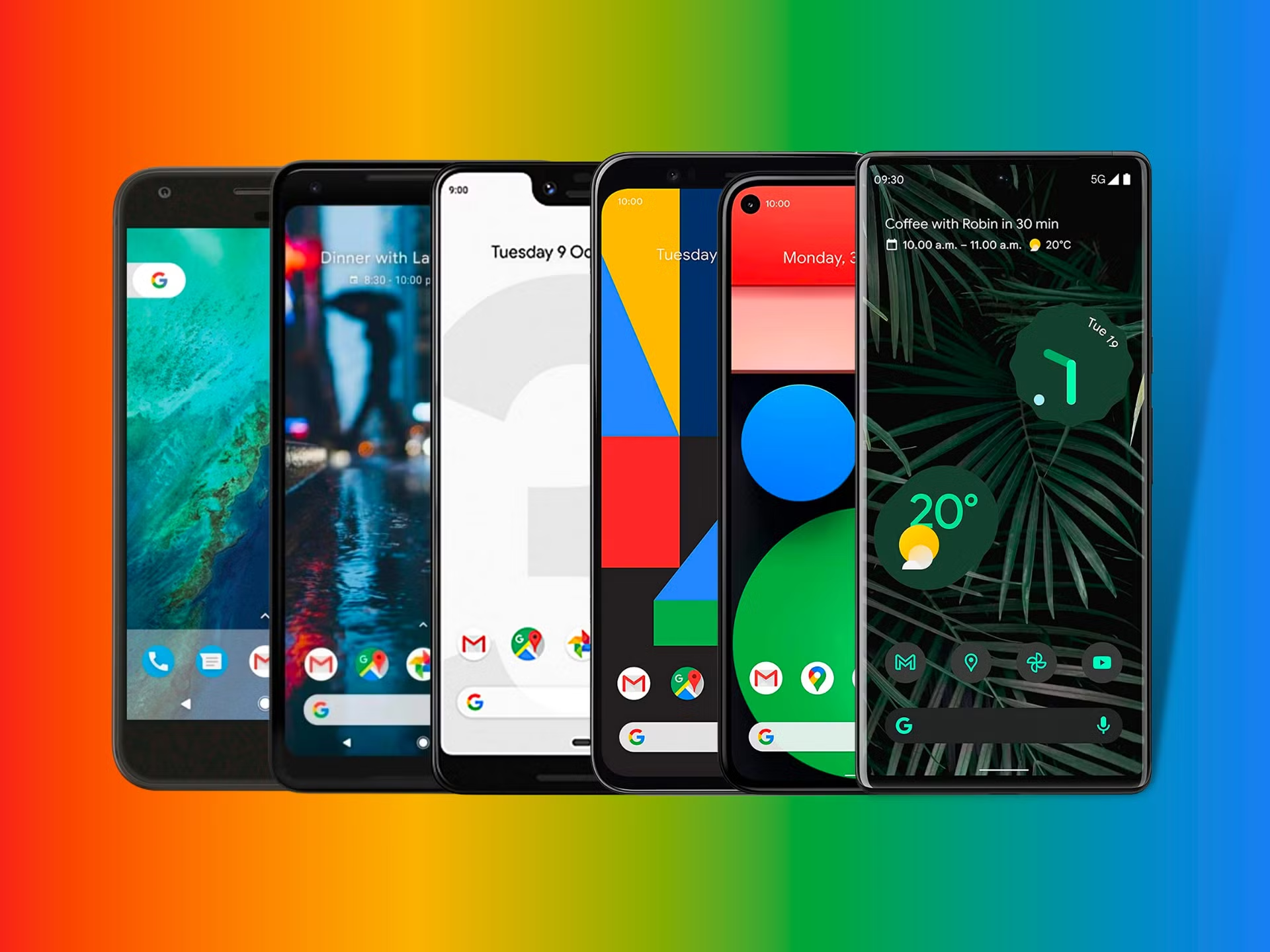
Google Pixel 11 Release Date Confirmed: What to Expect and Why Prices May Rise
Google has officially confirmed when its next generation of Pixel phones will arrive. The “next generation of Pixel” will be unveiled on August 12, 2026, just three weeks after Samsung’s summer Galaxy Unpacked event, setting up a packed late-summer stretch of flagship phone launches.
Here’s everything currently known about the Pixel 11 lineup, including expected models, features, and why this may be the most expensive Pixel launch yet.
Google Pixel 11 Release Date and Announcement
Google confirmed the August 12 reveal date without naming specific models, but the announcement follows a now-familiar pattern for the company’s flagship launches. Expectations point toward a full lineup refresh, arriving in the same competitive window as Samsung’s newly announced foldables and ahead of Apple’s fall iPhone event.
Timing Puts Pixel in a Crowded Launch Season
Landing just weeks after Samsung’s Unpacked event means the Pixel 11 will debut into an unusually competitive stretch of the smartphone calendar, with consumers weighing multiple major flagship launches within a short window of each other.
Expected Pixel 11 Lineup
While Google hasn’t confirmed device names, industry expectations point to three models: the Pixel 11, Pixel 11 Pro, and a Pixel 11 Pro Fold, continuing the tiered lineup structure Google has used in recent years.
Pixel 11
The standard Pixel 11 is expected to serve as the accessible entry point into the lineup, though reports suggest it may come with certain hardware trade-offs compared to previous years, discussed in more detail below.
Pixel 11 Pro
The Pro model is expected to offer the more complete flagship experience, likely including upgraded cameras and additional AI-driven features building on Google’s Gemini-powered software tools.
Pixel 11 Pro Fold
A follow-up to Google’s existing foldable lineup, the Pixel 11 Pro Fold is expected to continue Google’s push into the foldable category at a time when competition in that space — particularly from Samsung — is intensifying.
A New “Pixel Glow” Notification Feature
Early rumors point to a new lighting feature, informally referred to as “Pixel Glow,” designed to provide visual notification cues, along with an expected refresh to the Pixel Watch lineup launching alongside the phones.
Why Pixel 11 Prices May Be Higher This Year
Perhaps the most notable storyline heading into this launch isn’t a new feature — it’s price. Multiple reports suggest Pixel 11 pricing will increase compared to the Pixel 10 generation, and the reasoning ties back to a challenge affecting the entire smartphone industry in 2026.
The RAM Shortage Is a Major Factor
A global shortage of memory chips, driven largely by AI data center demand, has pushed component costs higher across the smartphone industry throughout 2026. Google’s Vice President of Devices and Services has acknowledged in interviews that the next Pixel phone is expected to cost more than the Pixel 10, a rare level of directness from a company that typically avoids confirming pricing details ahead of launch.
A Possible RAM Trade-Off on the Base Model
Some leaks suggest the base Pixel 11 could ship with 8GB of RAM, below the 12GB threshold reportedly required for full access to certain on-device Gemini AI features. If accurate, this would represent a cost-driven compromise on the entry-level model, potentially limiting which AI capabilities are available depending on which Pixel 11 configuration a buyer chooses.
Google Isn’t Alone in Facing This Pressure
The Pixel 11 isn’t unique in facing memory-driven cost pressure. Samsung, Apple, and other major manufacturers are navigating similar challenges throughout 2026, with analysts projecting industry-wide average smartphone prices to rise significantly compared to previous years.
How the Pixel 11 Fits Into Google’s Broader AI Strategy
Google has increasingly positioned Pixel devices as flagship showcases for its Gemini AI ecosystem, and the Pixel 11 is expected to continue that strategy. However, the potential RAM limitation on base models highlights an emerging tension in the industry: as AI features become more central to flagship marketing, the underlying hardware needed to fully support them is also becoming more expensive and harder to source.
What This Means for AI Features
If the base Pixel 11 does ship with reduced RAM, buyers who want full access to Google’s most advanced on-device AI tools may need to opt for a Pro model instead, a pattern that could become more common industry-wide as manufacturers navigate memory constraints.
Should You Wait for the Pixel 11?
Whether the Pixel 11 is worth waiting for depends largely on your priorities. If cutting-edge AI features are a top priority, the Pro models are likely the safer choice given the rumored RAM trade-offs on the base model. If you’re comparing options across brands, it’s also worth factoring in Samsung’s newly announced foldable lineup and Apple’s upcoming iPhone 18 release, both of which are launching within a similar window.
A Broader Industry Trend Worth Watching
Regardless of which phone you ultimately choose, 2026 is shaping up to be a year where memory costs — not just chip performance or camera upgrades — play a defining role in how flagship phones are priced and specced.
Final Thoughts
The Pixel 11’s confirmed August 12 launch date sets up one of the most closely watched phone releases of the year, arriving amid rising component costs and heightened competition from Samsung and Apple. With pricing expected to increase and potential trade-offs on base-model specifications, this year’s Pixel launch may say as much about the state of the smartphone industry as it does about Google’s own product roadmap.











Leave a Reply