
What Is Google? A Complete Guide to the World’s Biggest Tech Company
Google is more than a search engine. It’s the product most people use to start almost anything online, from checking email to finding directions to asking questions. But Google is also a massive business, an AI research leader, and part of a larger company called Alphabet.
This guide breaks down what Google actually is, how it makes money, what it owns, and why its recent AI push matters. Whether you’re researching the company for work, school, or general curiosity, you’ll get a clear picture by the end.
What Is Google, Exactly?
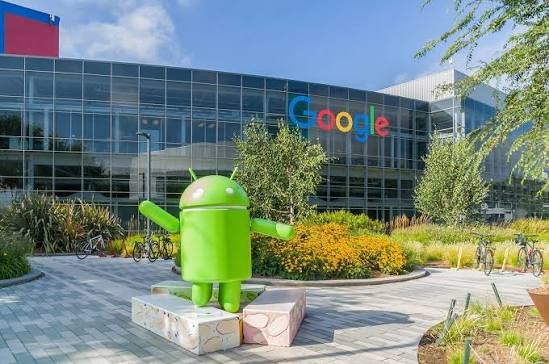
Google is an American search engine company, founded in 1998 by Sergey Brin and Larry Page. Since 2015, Google has operated as a subsidiary of the holding company Alphabet, Inc. Its headquarters remain in Mountain View, California.
Google now handles more than 70% of worldwide online search requests, making it central to how most people experience the internet. But search is only the starting point. The company offers more than 50 internet services and products, covering email, maps, video, cloud storage, mobile software, and more.
Google vs. Alphabet: What’s the Difference?
This trips up a lot of people, so here’s the simple version. Alphabet is the parent company. Google is its largest and most important subsidiary. Alphabet was formed in 2015 as a strategic restructuring of Google and its various subsidiaries, letting the core internet business operate separately from newer, riskier ventures.
Alphabet’s subsidiaries are split into three main segments: Google Services, Google Cloud, and Other Bets. Google Services covers the core search and advertising business, along with Android, Chrome, Google Maps, Google Play, YouTube, and the Gemini AI chatbot. Google Cloud provides enterprise cloud computing tools for businesses and governments. Other Bets houses early-stage ventures like Waymo (self-driving cars), Calico (biotech research), and Nest (smart-home devices).
Who Runs Google?
Sundar Pichai became CEO of Google in 2015 and was named CEO of Alphabet in December 2019, replacing Larry Page. Pichai joined Google in 2004 and worked on early products like the Google Toolbar before rising through the ranks. Today, he leads both companies at once.
Larry Page and Sergey Brin, Google’s founders, remain involved as directors and hold significant voting power in the company, even though neither runs day-to-day operations anymore.
What Products Does Google Own?
Google’s product lineup is enormous, but a few categories matter most.
Search and Advertising
This is still Google’s core business. Google Services provides ads, Android, Chrome, devices, Gmail, Google Drive, Google Maps, Google Photos, Google Play, Search, and YouTube. Most of this is free for users and monetized through advertising instead.
Cloud and Enterprise Tools
Google Cloud offers consumption-based fees and subscriptions for AI solutions, including AI infrastructure and the Vertex AI platform. It also provides Google Workspace, which includes cloud-based tools like Calendar, Gmail, Docs, Drive, and Meet for businesses. This side of Google competes directly with Amazon Web Services and Microsoft Azure.
YouTube and Subscriptions
Google also sells YouTube consumer subscription services, including YouTube TV, YouTube Music and Premium, NFL Sunday Ticket, and Google One. These recurring subscriptions have become a bigger part of the company’s revenue mix in recent years.
How Does Google Make Money?
Advertising still drives most of Google’s revenue. In 2025, Alphabet’s annual revenue reached $402.96 billion, with net income of $132.17 billion. Broken down by segment, Google Search and Other brought in $224.53 billion, Google Cloud generated $58.71 billion, and YouTube advertising added $40.37 billion.
Cloud has become the company’s fastest-growing segment. On the company’s Q2 2026 earnings call, Alphabet reported that Cloud revenue grew 82% year-over-year, powered by strong demand for AI infrastructure, with the Cloud backlog reaching $514 billion. That growth shows how much AI demand is now shaping Google’s business, not just its products.
Google’s Big AI Push
If you’ve followed tech news over the past couple of years, AI is the story. Google has researched artificial intelligence for over a decade through Google Brain and DeepMind. But the pace picked up sharply once competitors entered the chatbot race.
Google launched Bard in 2023 and rebranded it as Gemini in 2024. Gemini is now built into Google Search through AI Overviews, along with Gmail, Google Docs, and Android. For everyday users, the clearest sign of this shift is on the search results page itself: AI Overviews now appear at the top of many searches, summarizing answers directly instead of just linking to websites.
The AI investment keeps expanding. At Google I/O 2026, the company introduced Gemini 3.5 Flash, a new Gemini Omni video model, and a personal AI agent called Gemini Spark. By that point, the Gemini app had surpassed 900 million monthly active users. On the enterprise side, nearly 90% of the Fortune 100 now use Gemini Enterprise, according to Pichai’s own remarks on a recent earnings call.
Regulatory Pressure on Google
Google’s size has brought increasing scrutiny from regulators worldwide. In July 2026, the European Commission fined Google €890 million under the Digital Markets Act, ruling that the company had unfairly favored its own services in search results and imposed anticompetitive restrictions through Google Play. Combined with ongoing legal challenges in the US, this reflects a broader trend: as AI-powered search grows more competitive, regulators are paying closer attention to how much control Google has over the tools people use every day.
Why Google Still Matters
Google’s influence goes beyond any single product. It shapes how information gets organized, how businesses reach customers online, and increasingly, how people interact with AI in daily life. Its scale gives it resources few competitors can match, but that same scale is exactly why regulators, businesses, and everyday users keep such a close eye on what the company does next.
Frequently Asked Questions
Is Google the same company as Alphabet? No. Alphabet is the parent company, and Google is its largest subsidiary, handling search, advertising, Android, YouTube, and Cloud.
Who is the CEO of Google? Sundar Pichai is CEO of both Google and Alphabet.
How does Google make most of its money? The majority of Google’s revenue comes from advertising through Search, its display network, and YouTube ads.
What is Gemini? Gemini is Google’s family of AI models, integrated into Search, Gmail, Docs, and Android.
Final Thoughts
Google started as a search engine and grew into one of the most influential technology companies in the world. Understanding how it’s structured under Alphabet, where its revenue actually comes from, and how deeply AI is now woven into its products gives you a much clearer picture of the company than the search box alone ever could. As AI reshapes how people find information online, Google’s next moves are likely to matter just as much as its first two decades did.









Leave a Reply