

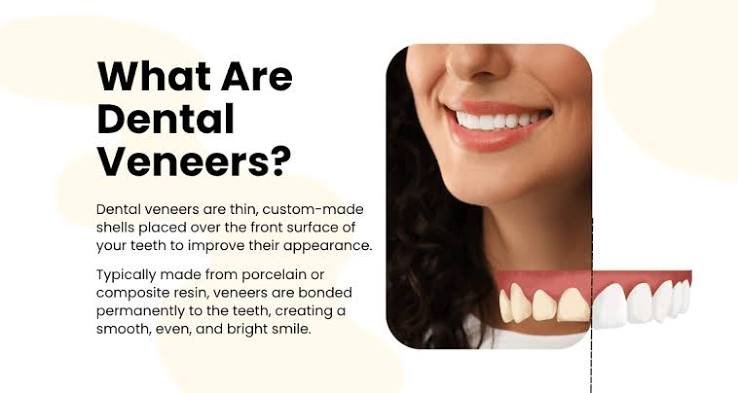
Dental Veneers: Cost, Types, and What to Really Expect
Search “veneers” and you’ll find two kinds of pages: celebrity before-and-afters, and price lists that all quote roughly the same range without explaining why the gap between the low and high end is often thousands of dollars per tooth. This guide is meant to sit between those two — enough real detail that you walk into a consultation asking better questions, not just a bigger budget.
A veneer is a thin, custom-made shell — usually porcelain or composite resin — bonded to the front surface of a tooth to change its color, shape, size, or length. It’s one of the most requested procedures in cosmetic dentistry, largely because it solves several problems at once: staining, chips, gaps, and minor misalignment, all in a fraction of the time orthodontics would take.
Veneers at a Glance
| Composite | Porcelain | No-Prep / Lumineers® | Zirconia / e.max | |
|---|---|---|---|---|
| Cost per tooth | $250 – $1,500 | $900 – $2,500 | $800 – $2,500 | $900 – $2,500+ |
| Lifespan | 4 – 8 years | 10 – 20 years | 5 – 10 years | 15 – 25 years |
| Visits needed | Often 1 | 2 – 3 | 2 – 3 | 2 – 3 |
| Enamel removed | Minimal | ~0.3–0.7mm | Little to none | ~0.3–0.7mm |
| Reversible? | Mostly | No | Often yes | No |
| Best for | Small fixes, tight budgets | Long-term smile makeovers | Minimal correction, enamel preservation | Grinders, maximum durability |
A full set (typically the six to eight teeth that show when you smile) runs $9,000–$25,000 in porcelain, or roughly a third of that in composite — though composite’s shorter lifespan means it’s not always the cheaper option once you account for replacement.
How the Materials Actually Differ
Porcelain is the default recommendation for anyone planning a real smile makeover, and it’s earned that reputation. Ceramic handles light almost the way natural enamel does, which is why porcelain veneers look convincing even up close, and the material resists staining from coffee, wine, and turmeric far better than composite ever will. The catch is that a thin layer of enamel is removed to make room for the shell — usually well under a millimeter, but permanent — and because each veneer is fabricated in an outside lab, you’re looking at two to three appointments spread over one to a few weeks.
Composite skips the lab entirely. Your dentist sculpts the resin directly onto the tooth and shapes it chairside, which means a single chipped tooth can sometimes be fixed same-day. It’s the right call for a small, isolated fix or as a lower-stakes way to see whether you like a bigger smile change before committing to porcelain. The honest downside: composite picks up stains faster and needs replacing roughly twice as often, so the “cheaper” option isn’t always cheaper once you price out a decade of use.
No-prep veneers (Lumineers is the best-known brand) are engineered to be thin enough that little or no enamel removal is needed, which makes them reversible in a way traditional porcelain isn’t. The trade-off is coverage — with less material to work with, no-prep veneers are better suited to modest corrections than to masking significant discoloration or crowding.
Zirconia and e.max sit at the top of the range for a reason: both combine porcelain-level aesthetics with meaningfully higher fracture resistance, which is why they’re frequently recommended for patients who grind their teeth at night or simply want the longest possible runway before replacement.
What Actually Drives the Price
Ask two dentists in the same city for a quote and you can get numbers that differ by a thousand dollars per tooth. That gap usually comes down to a handful of factors, not the porcelain itself: the lab producing the veneer (a premium domestic lab costs more than an outsourced one), the dentist’s specific training and volume of cosmetic cases, your location (major metro markets run 30–60% higher than smaller cities), and how many teeth you’re treating at once, since most practices offer a modest per-tooth discount on a full set.
Dental insurance almost always classifies veneers as cosmetic and won’t cover them, though HSA and FSA funds can sometimes apply, and financing through CareCredit or an in-house payment plan is common enough to ask about directly.
The Procedure, Visit by Visit
- Consultation. Your dentist examines your teeth and gums, takes X-rays, and talks through what you want to change. Many practices now build a digital mock-up so you can see an approximation of the result before any tooth is touched.
- Preparation. For porcelain, a thin layer of enamel is removed under local anesthesia to make room for the shell. An impression or digital scan goes to the lab, and you may wear temporary veneers in the interim.
- Bonding. At the final visit, your dentist checks fit, bite, and shade against your natural teeth, makes any last adjustments, and permanently bonds each veneer in place.
Composite compresses this into a single visit in many cases, since there’s no lab turnaround to wait on.
Who’s a Good Candidate — and Who Isn’t
Veneers are a cosmetic solution for teeth that are otherwise structurally sound. Active decay, gum disease, or insufficient enamel all need to be resolved first, and a dentist should tell you that plainly rather than moving straight to shade selection. Veneers also aren’t a substitute for a missing tooth — that’s the job of an implant or bridge, not a veneer.
What Nobody Puts in the Brochure
- The commitment is largely one-way. Once enamel is removed for a traditional porcelain veneer, it doesn’t grow back — you’re committing to a veneer or crown on that tooth from here on.
- They can still chip or debond. Veneers aren’t indestructible; biting into very hard foods or grinding at night raises the risk. A night guard is cheap insurance against an expensive fix.
- Your natural teeth keep aging — your veneers don’t. Porcelain holds its shade permanently, while the teeth around it can shift color over years, occasionally creating a mismatch that eventually prompts patients to redo the full set rather than just the original teeth.
- Experience matters more than the material. Shade-matching and shaping are genuinely difficult to get right, and the quality gap between a dentist who does veneers occasionally and one who does them constantly shows up in the mirror, not just the price.
Caring for Veneers
Nothing exotic: brush twice daily with a non-abrasive toothpaste, floss daily, steer clear of biting directly into very hard foods, wear a night guard if you grind, and keep up with six-month checkups so your dentist can check the margins and bite before a small issue becomes a bigger one.
Frequently Asked Questions
How long do veneers actually last? Porcelain typically lasts 10–20 years with proper care; composite typically lasts 4–8 years. Both timelines shorten with grinding, poor hygiene, or skipped checkups, and extend with a night guard and regular maintenance.
Do veneers ruin your teeth? Traditional porcelain veneers require removing a small, permanent amount of enamel, which is why the decision is worth making carefully — but properly placed veneers on healthy teeth don’t damage the tooth underneath. No-prep veneers avoid this trade-off but offer less coverage for significant correction.
Are veneers better than teeth whitening? They solve different problems. Whitening only changes shade and works on natural enamel; veneers change shape and shade simultaneously but involve a permanent procedure. Many patients whiten first and decide from there whether veneers are still worth pursuing.
Can veneers be removed or replaced? No-prep veneers are generally reversible. Traditional porcelain veneers are considered permanent and are replaced, not removed outright, once they reach the end of their lifespan.
The Bottom Line
Veneers consistently rank among the highest-satisfaction procedures in cosmetic dentistry because the change is visible, relatively fast, and — with porcelain — genuinely long-lasting. Composite buys you a lower-stakes way to test the idea; porcelain and its premium alternatives buy you a decade or two of not thinking about it again. Either way, the number that matters most isn’t the one on a national price list — it’s the one your dentist gives you after actually looking at your teeth.
Internal linking suggestions: link “teeth whitening” to a whitening service page, “dental implants or bridges” to an implants page, “night guard” to a related product page if offered, and “your dentist gives you after actually looking at your teeth” to your consultation booking page. Add FAQ schema markup around the four Q&A pairs above to target the “People Also Ask” box.











Leave a Reply